

How to choose a high-quality billiard set?
Release time:
2025-02-19
Having a high-quality set of billiard balls can significantly affect the main performance in a game. The ball's reaction to the impact of the cue, its bounce, elasticity and ability to transfer energy can completely transform the feel of the game. Increased friction will reduce the speed of the game, while unevenly weighted balls will cause the ball to deviate from its path.
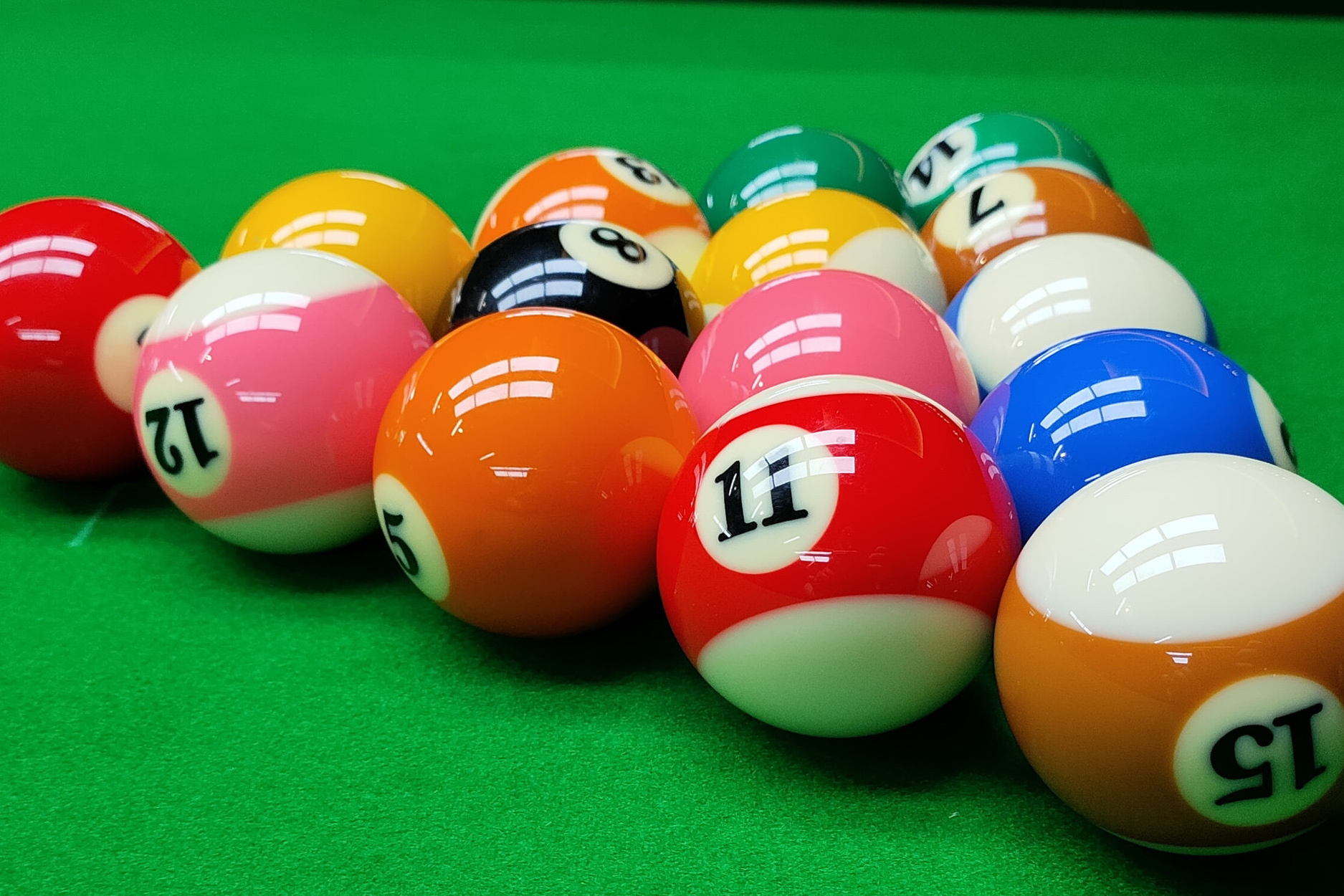
A high-quality set of billiard balls can significantly impact performance in a game. The balls' response to cue impact, bounce, elasticity, and energy transfer can fundamentally alter the feel of the game. Increased friction will slow the game down, while unevenly weighted balls will cause trajectory deviations.
The best billiard balls are made of phenolic resin, significantly improving accuracy, consistency, and power.
I. Past Materials Used
From the French royal court in the 15th century to the present, billiard balls have had a long and varied history. Throughout the history of the game, ivory, clay, wood, celluloid, Bakelite, micarta, and steel have all been used at different points in time to make billiard balls.
As one might expect, ivory was very expensive, so measures were taken to reduce the cost of billiard balls. Following inventor John Wesley Hyatt's development of a new plastic material in 1869, celluloid balls became popular in the early 20th century. Unfortunately, these sets were prone to cracking and chipping under high impact, leading to the search for new solutions.
Today, phenolic resin, polyester, and other polymers are the preferred materials. Recently, Krom Premiere released chrome-plated billiard balls. They are quite cool; you should definitely check them out!
How to Choose a Quality Set of Billiard Balls?
II. Variations
Billiard balls have evolved to accommodate different styles of play and game variations. The number of balls, markings, diameter, and weight in a set depend on the game you are playing. Modern American pool uses 2½ inch balls weighing 5½-6 ounces. Balls 1-7 are solids, while 9-15 are stripes, and the 8-ball has a distinctive design.
III. What to Look For
When selecting a high-quality set of billiard balls, consider stiffness, roundness, weight distribution, coefficient of friction, and elasticity. These factors will significantly influence your game, and you will immediately be able to distinguish the difference between a high-quality set and a cheap imitation.
Tag:
Recommend News

First inspection, patrol inspection and final inspection of each manufacturing process. We are determined not to put defective parts, to ensure that every part is qualified. We do our best to provide high quality products and good after-sales service at competitive prices
Phone/WeChat:
E-mail:
Address:
Chihu Avenue, Chihu Industrial Park, Gangkou Street Town, Chaisang District, Jiujiang City
Quick Navigation
Main Products
Please enter your E-mail,
Check out our latest developments!


